
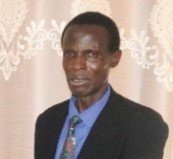
Prof. Isaïe Nzeyimana
Prof. Isaïe Nzeyimana is a distinguished philosopher, educator, and intellectual based in Rwanda, whose scholarly work centers on political philosophy, national ideology, and the application of philosophical inquiry to contemporary African development and post-conflict healing. As a Professor at the University of Rwanda, his career spans decades of teaching at both secular and religious institutions, including the National University of Rwanda, major seminaries, the Rwanda Military Academy, and the National Police College.
His academic journey is anchored by a Doctorate in Philosophy from the Catholic University of West Africa (UCAO/UUA), accredited by the Conseil Africain et Malgache de l’Enseignement Supérieur (CAMES). This formal training underpins a prolific body of work that interrogates the foundations of Rwandan and African thought. He is the author of numerous influential books, such as “Histoire et Pragmatisme: Le Rwanda, sur sa route” and “L’Afrique et son Concept: Penser le développement de l’Afrique avec Hegel,” which demonstrate his commitment to using philosophical frameworks to analyze national identity and progress.
Prof. Nzeyimana’s research has directly contributed to critical national projects. He co-authored the seminal study “Le manifeste des Bahutu et la diffusion de l’idéologie de la haine au Rwanda,“ and his expertise was instrumental in preparing the dossier for the inscription of Rwandan genocide memorial sites (Kigali, Murambi, Nyamata, Bisesero) on the UNESCO World Heritage List. His scholarly activities extend beyond publishing to include organizing philosophical conversations and evaluating the teaching of philosophy in Rwandan schools under UNESCO sponsorship.
An internationally recognized thinker, he has been invited to present his work at prestigious global forums, including documenta 14 in Athens and the SculptureCenter in New York, where he has lectured on topics ranging from decolonizing archaeology to the role of memory. Dr. Nzeyimana’s career embodies the vital role of the philosopher as a public intellectual—one who engages deeply with history, guides pedagogical development, and contributes to the foundational discourse of a nation’s reconstruction and future.